



GM to produce LMR prismatic battery cells in Tennessee by 2028
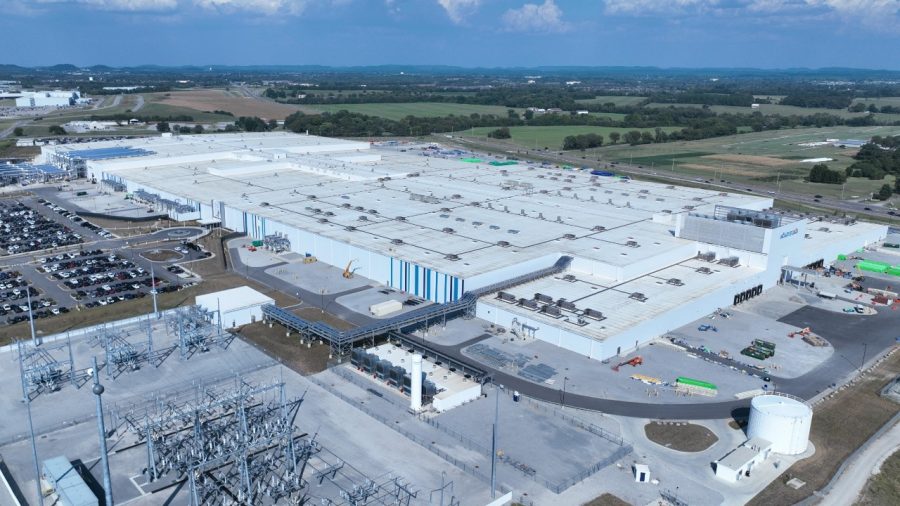
General Motors and LG Energy Solution are expanding their battery manufacturing strategy in the US, with their Ultium Cells joint venture preparing to produce lithium manganese-rich (LMR) prismatic battery cells at its Spring Hill, Tennessee facility.
Construction and facility upgrades are scheduled to begin later in 2026, with completion expected in 2028. The expansion is projected to add 500 jobs to the Spring Hill operation, which currently employs about 1,200 people, according to General Motors.
The move is intended to bring LMR battery technology into commercial production for future GM electric vehicles. GM said Ultium Cells is expected to become the first manufacturer globally to commercially produce the next-generation LMR prismatic cells.
The technology is designed to deliver 33% higher energy density than lithium iron phosphate (LFP) cells at a comparable cost, according to GM. That combination could give automakers another option between lower-cost battery chemistries and higher-energy-density high-nickel cells.
GM expands its LMR battery manufacturing strategy
LMR is becoming an important part of GM’s effort to develop different battery chemistries for different vehicle requirements.
GM and LG Energy Solution announced in 2025 that they would commercialise LMR prismatic cells for future electric trucks and full-size SUVs. Commercial production in the US was initially targeted for 2028, while pre-production was expected to begin at an LG Energy Solution facility in late 2027.
The partners’ LMR development programme has been aimed at addressing some of the historical challenges associated with manganese-rich batteries, including battery life and voltage degradation.
GM has said the technology could combine the range characteristics needed for larger EVs with a lower battery-pack cost than current high-nickel solutions. The company has previously targeted more than 400 miles of range for an electric truck using LMR technology, although that remains a GM target rather than a confirmed production specification.
The planned Spring Hill production line therefore represents more than a new battery chemistry. It gives Ultium Cells another manufacturing capability that can be deployed across GM’s future EV portfolio.
Ultium Cells moves towards multiple battery chemistries
The Spring Hill facility is being developed as a flexible battery manufacturing operation rather than one dedicated to a single chemistry.
GM has already been preparing the plant to produce LFP cells. In July 2025, Ultium Cells announced plans to upgrade the Spring Hill facility to scale LFP production, with commercial output targeted for late 2027.
The addition of LMR will give the site capabilities spanning multiple battery chemistries and form factors.
This is significant for automotive manufacturers because battery requirements vary considerably between vehicle segments. Long-range electric trucks and full-size SUVs have different requirements from lower-cost passenger vehicles, while commercial applications can place different demands on energy density, durability and cost.
GM’s strategy is therefore moving towards selecting battery technology according to vehicle requirements rather than applying one chemistry across its entire EV portfolio.
The company already uses high-nickel chemistry for vehicles where range is a priority. LFP is being developed as a lower-cost option, while LMR is intended to occupy a position between these technologies by combining higher energy density with competitive cost.
Why LMR could matter for EV battery costs
Battery chemistry is a major factor in the cost, range and packaging of an electric vehicle.
LMR cells use a higher proportion of manganese, a comparatively lower-cost cathode material, while reducing reliance on more expensive materials. GM and LG Energy Solution have said their LMR technology can provide 33% greater energy density than the best-performing LFP-based cells at a comparable cost.
The prismatic format is also relevant to manufacturing and vehicle design. Unlike pouch cells, prismatic cells use a rigid rectangular enclosure that can enable more space-efficient packaging and potentially reduce the number of modules and mechanical components required in a battery pack. GM and LG Energy Solution have been developing prismatic technology as part of their broader battery partnership.
For GM, combining the LMR chemistry with a prismatic form factor could therefore provide benefits at both the cell and battery-pack levels.
However, commercial production is still ahead. The Spring Hill expansion is not expected to be completed until 2028, meaning the technology’s real-world cost, durability and vehicle performance will ultimately need to be demonstrated at production scale.
Spring Hill strengthens US battery manufacturing
The LMR programme also expands the strategic role of Spring Hill within GM’s US battery manufacturing network.
GM and LG Energy Solution established Ultium Cells as a joint venture to develop large-scale domestic battery production. The Spring Hill facility was originally backed by a more than $2.3 billion investment announced in 2021 and was designed to supply battery cells to GM’s nearby vehicle manufacturing operations.
GM has since been repositioning the facility to support multiple chemistries. The company said in 2025 that Spring Hill would become a manufacturing location for LFP cells while future LMR production would complement those operations.
The latest expansion adds another layer to that strategy and could increase the importance of Tennessee within the US EV battery supply chain.
The additional 500 jobs will also expand the site’s manufacturing workforce, while the investment is expected to create further requirements across equipment, materials, engineering and battery manufacturing services.
What GM’s LMR investment means for the EV market
The broader significance of the project is GM’s move towards a diversified battery portfolio.
Instead of relying exclusively on high-nickel cells for long-range vehicles or LFP for lower-cost applications, the automaker is developing a wider set of technologies that can be matched to different vehicle segments.
For battery suppliers and technology companies, this points towards a more fragmented but potentially larger market for cell chemistries, manufacturing equipment, materials and battery-management technologies.
For GM, the objective is to improve the economics of future EVs while maintaining the range and performance required in larger vehicles such as electric trucks and SUVs.
The key milestone will be the transition from development to commercial production. With Spring Hill upgrades expected to be completed in 2028, the industry’s focus will turn to whether LMR can deliver the promised combination of energy density, cost and durability at automotive manufacturing scale.
Market Signal: US battery manufacturing is moving towards a multi-chemistry model, with GM and LG Energy Solution positioning LMR alongside high-nickel and LFP cells to balance range, cost and vehicle applications.
Follow B2B Market Signal on social media for the latest business news, industry developments, market intelligence and analysis. Connect with us on LinkedIn and follow us on Instagram at @b2bmarketsignal for regular updates.