

Chinese automakers gain ground as Argentina opens its car market
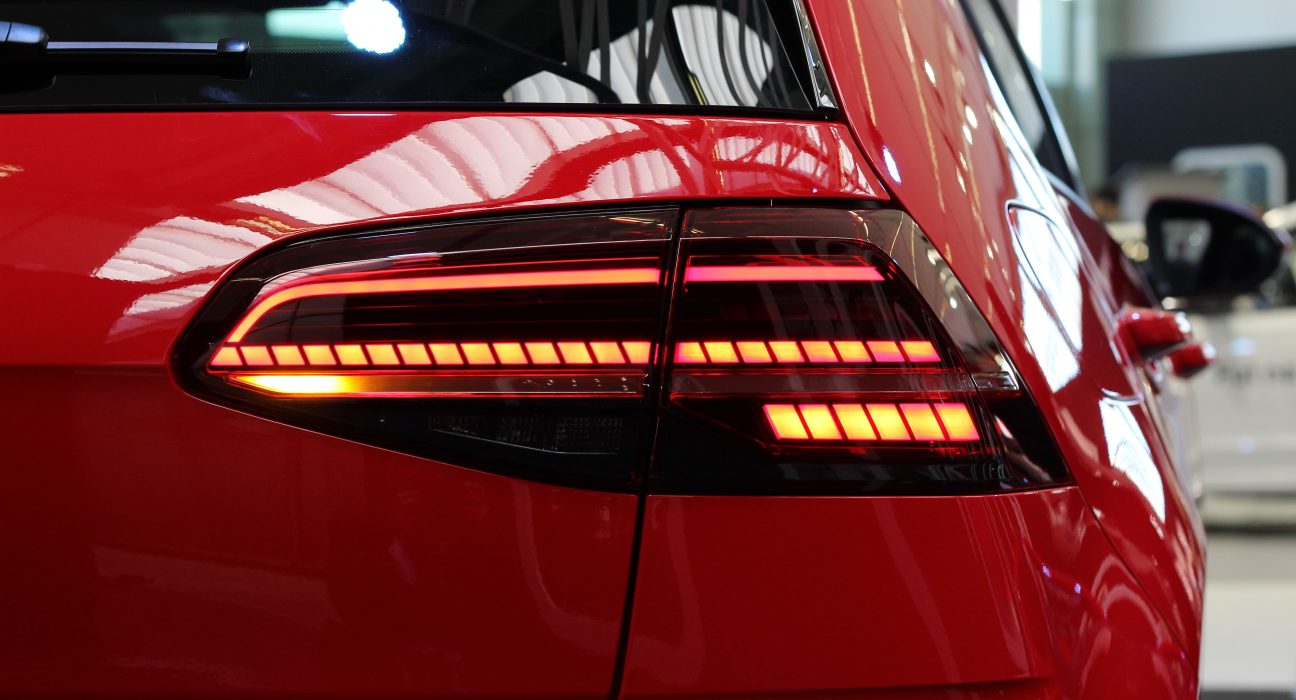
Argentina’s increasingly open automotive market is creating room for Chinese carmakers to expand, with Chinese brands accounting for about 10% of car and light commercial vehicle sales in August 2026, compared with roughly 2% late last year.
The shift is being driven in part by Argentina’s decision to reduce barriers to imported electric and hybrid vehicles. For 2026, the government allocated a tariff-free quota of 50,000 electric and hybrid vehicles, allowing a broader range of models to enter the market and increasing competition with established manufacturers.
The policy has coincided with a rapid expansion by Chinese automakers. More than 20 Chinese brands, including Geely, Chery, GWM and Dongfeng, were represented at Buenos Aires’ first Chinese auto show on 2 October.
BYD establishes an early position in Argentina
BYD has emerged as one of the most visible beneficiaries of the market opening.
The Chinese electric vehicle manufacturer began commercial operations in Argentina in October 2025 and has since established a significant position in the country’s imported-vehicle market. BYD said in August that it had reached 10,000 vehicle sales in Argentina less than a year after its launch.
August registration data also placed BYD among Argentina’s leading automotive brands. The company registered 1,389 vehicles during the month, giving it a 3.3% share of the overall new-vehicle market and placing it ninth among brands, according to industry data reported in Argentina.
The company’s expansion forms part of a broader Latin American strategy. BYD already leads electric vehicle sales in markets including Brazil, Colombia, Ecuador and Uruguay.
The growing presence of Chinese brands is becoming increasingly visible to consumers and dealerships. German Molina, an Argentine consumer quoted by Reuters, said he had already bought a Chinese vehicle and was considering another.
That growing visibility could become an important factor as Chinese manufacturers attempt to move beyond early adopters of electric vehicles and compete across a wider range of passenger and commercial vehicle segments.
Argentina’s import policy is reshaping competition
Argentina’s tariff-free vehicle regime is central to the market’s changing competitive dynamics.
The government originally established an annual ceiling of 50,000 vehicles eligible for tariff-free imports under the alternative-powertrain regime. The 2026 allocation covered electric, hybrid, mild-hybrid and plug-in hybrid vehicles.
The government has subsequently expanded the value thresholds for qualifying vehicles. Its latest rules set a FOB ceiling of $35,000 for fully electric vehicles and $18,000 for conventional and plug-in hybrids, while maintaining a $16,000 threshold for mild hybrids.
The policy has coincided with a sharp increase in electrified-vehicle registrations. Government data showed that electric and hybrid registrations reached 48,320 units during the first seven months of 2026, up 322% from the corresponding period of 2025. Their market share rose from 4.4% to 21.1% over the same period.
For automakers operating in Argentina, the result is a market in which imported vehicles are becoming a more significant source of competitive pressure at the same time as overall demand remains under strain.
Local manufacturers face a more competitive market
Argentina’s overall new-vehicle market has weakened in 2026. ACARA reported 44,415 vehicle registrations in August, down 19.1% from August 2025, while registrations for the first eight months were also below the previous year’s level.
That contraction makes the growth of Chinese brands more significant for incumbent manufacturers. As competition increases, established companies face pressure to offer newer models, improve technology and respond to changing demand without losing the production and export advantages of local manufacturing.
Renault, for example, is preparing to manufacture its Niagara pick-up in Argentina. The company previously announced a $350 million investment for the model at its Santa Isabel plant, with production scheduled from 2026.
Industry representatives have argued that Argentina should concentrate on areas where its domestic automotive sector already has competitive strengths, particularly pick-up trucks and export-oriented production.
This creates an important distinction in the competitive landscape. Chinese manufacturers are gaining ground rapidly in imported passenger and electrified vehicles, while Argentina’s established manufacturers retain opportunities in locally produced vehicles and regional exports.
Toyota investment adds to Argentina’s EV shift
The response from global manufacturers is also extending beyond model launches.
Toyota has committed about $1.34 billion to an electrified-vehicle project in Argentina, a development announced days before the Chinese auto show. Reuters reported that the investment will support the development of a new vehicle production facility and represents the largest single investment in Argentina’s automotive sector.
The investment indicates that the changing competitive environment is not simply an import story. Argentina is also seeking to strengthen its position as a manufacturing base for electrified vehicles.
At the same time, Tesla is preparing a more direct presence in the country. Tesla Argentina was formally established in March 2026, with its corporate purpose covering the import, manufacture, assembly, distribution and sale of vehicles, including electric vehicles, as well as energy-storage and charging activities.
The potential arrival of Tesla would add another major international EV competitor to a market already experiencing greater Chinese participation.
What Argentina’s automotive market signals next
Argentina’s automotive sector is therefore entering a more competitive phase.
The immediate signal is the rapid expansion of imported Chinese vehicles following the easing of trade barriers. The longer-term development is more significant: established manufacturers are being pushed to respond through new models, electrification investments and improvements to local production.
For suppliers and automotive businesses, this could increase demand for EV-related components, charging infrastructure, technology services and new dealership capabilities. It could also intensify competition for customers, distribution networks and manufacturing investment.
The next stage will depend on whether Argentina can sustain the policy environment that has encouraged greater vehicle choice while allowing domestic manufacturers to remain competitive.
For Chinese automakers, the priority will be converting rapid initial growth into durable market share. For established manufacturers, the challenge will be modernising their product portfolios while retaining Argentina’s role as a regional production and export base.
Market Signal: Argentina’s more open automotive trade regime is creating a larger competitive opening for Chinese automakers while encouraging established manufacturers to invest in electrified vehicles and refresh their local product portfolios.
Follow B2B Market Signal on social media for the latest business news, industry developments, market intelligence and analysis. Connect with us on LinkedIn and follow us on Instagram at @b2bmarketsignal for regular updates.